 By
By 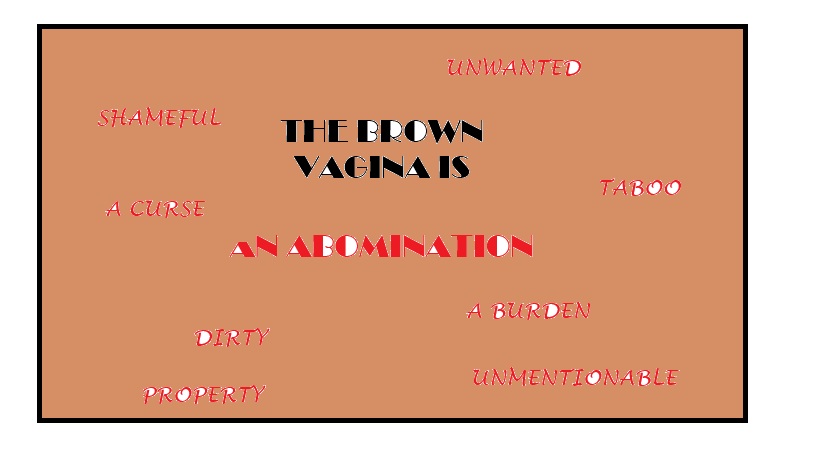
Vagina shame is equally if not more damaging than period poverty yet it’s a topic that never sees the light of day. The first lady, Mrs Ali started a ‘period poverty initiative’ in 2021. School girls in many public schools across Guyana are given free sanitary pads. While this initiative greatly assists girls especially those affected by poverty, there is a topic that is hardly ever addressed and that is ‘Vagina Shame’.
The first time I had my period
The first time I had my period I thought that I was dying then immediately after I felt great shame because of the body part involved. My shame was greater than my fear of dying so I told nobody about it. I used handkerchiefs and socks as makeshift pads to soak up the blood then either disposed of these in the garbage or hid it under a shed we had in the yard. Eventually, I was found out but nothing was said to me about the process. I was just given some sanitary pads. The shame remained though.
Why the Shame?
Misogynistic practices and beliefs in the Indo-Guyanese community are passed down from generation to generation dating back to when the ancestors came from India.
Video below from the: United Nations on Managing Menstrual Hygiene in India
The vagina is taboo
The vagina was and still is not discussed like a normal topic. It is unmentionable, hidden, taboo, dirty…. that is how they see it and everything related to it.
Nobody talked about menstruation but when I became a ‘young lady’ suddenly I was unwelcomed at their homes. It was as if the vagina was going to pollute their environment; I had become a dirty thing.
Even girls do not talk about the vagina and related biological processes among themselves. It’s like they pretend that they don’t have vaginas or it’s like a decorative organ that one just washes and leaves alone.
How they act and what they say
Sometimes, my female students would ask to use the washroom and divulge the extra bit of information about being on their period without me asking for this. Maybe, they believe that by telling me this I’d allow them to leave the class immediately and spend more time than usual in the washroom. Personally, I do not have an issue with students going to the washroom during my class so the justification is not needed but whenever they mention their period it’s always a whisper as if it’s something to be embarrassed about and they would look embarrassed.
Growing up, whenever I went to the shop in the village to buy pads the seller would wrap the pack of Stayfree with newspapers then place it in a black plastic bag although thin, light-coloured bags were used for other items. The pads because of their purpose were to be hidden. And even then, discussing the period and period-related issues such as cramps and heavy bleeding among girls my age was not something we did. I didn’t want others to know when I was having it and my friends didn’t tell me either. Although we all had vaginas we were all conditioned to view the vagina as something dirty and unmentionable.
And how do men and women feel about it? An unmentionable topic for most.
One day at my workplace I bought some polourie (fried flour mixed with split peas) from a vendor and when I attempted to eat one, it smelled ‘off’. Apparently the sour had spoilt so I informed the DHM because students could get sick from buying the same thing and I wanted him to check out the item himself. Later, when I asked him about it he said that the sour had indeed spoilt but it was probably because a woman who was having her period made the sour or handled it!
Another time, I was having a conversation with a pathologist about the autopsy process and I made a comment about menstruation. Immediately, he screwed up his face as if I’d just said something nasty, put down what he was eating and told me to change the topic. Imagine we were having a long conversation about dead people while we were eating fried fish and other stuff and the moment I mentioned menstruation in dead females he found the topic too dirty to be discussed but talking about decomposition etc., wasn’t!
And when I was growing up nobody never discussed menstruation with me. I learnt about it and the female anatomy during my biology class in Grade 10. At the time, I didn’t own a computer, there was none in the home and we had no access to the internet. Those were the days when I actually had to visit the library to read outdated books for information to complete assignments.
In the Indo-Guyanese community
Many Indo-Guyanese girls are conditioned from a very young age to view their vaginas as dirty and shameful. The Indo-Guyanese patriarchal culture and concrete gender roles and norms significantly contribute to how the brown female is viewed and raised but what about the personal development of the individual? How does brainwashing girls to hate their vaginas help them or improve their lives? It doesn’t, it only helps to promote patriarchal values and maintain control over girls and women.
I believe that because brown women are not seen as individuals with their own needs, dreams, rights and desire to achieve personal growth and development, the way they are raised has more to do with the needs of others than their own needs. By conditioning brown girls to view themselves as dirty and inferior due to having vaginas between their legs the status quo is maintained and having control and power over them remain.


